Stop rebuilding the glue
Workflows, policy, project isolation, recall, and PDF gates are productized. Your engineers build product, not another internal platform from scratch.
Platform · Agent Stack
NLT Agent Stack is infrastructure other companies buy to build their own agent systems. AgentForge orchestrates. NLT Memory remembers. Report Studio documents. Scout, Portfolio Engine, and Web-Store-DNA are reference consumers here, not what you buy on this door.
Why companies buy
You buy this when raw SDKs leave every team reinventing orchestration, memory, and collateral, and you want an OS that already survived production constraints.
Workflows, policy, project isolation, recall, and PDF gates are productized. Your engineers build product, not another internal platform from scratch.
HTTP boundaries and project isolation keep consumer logic out of the platform tree. You own your systems. We do not hover forever.
We run this stack ourselves. Open the GUIs. Open the portfolio reference consumers. Decide from evidence.
ROI
Directional outcomes from how we run this ourselves. Not audited financials. We size numbers with you on the walkthrough.
One orchestration OS plus shared memory beats three teams each bolting agents onto a model SDK with no operator surface.
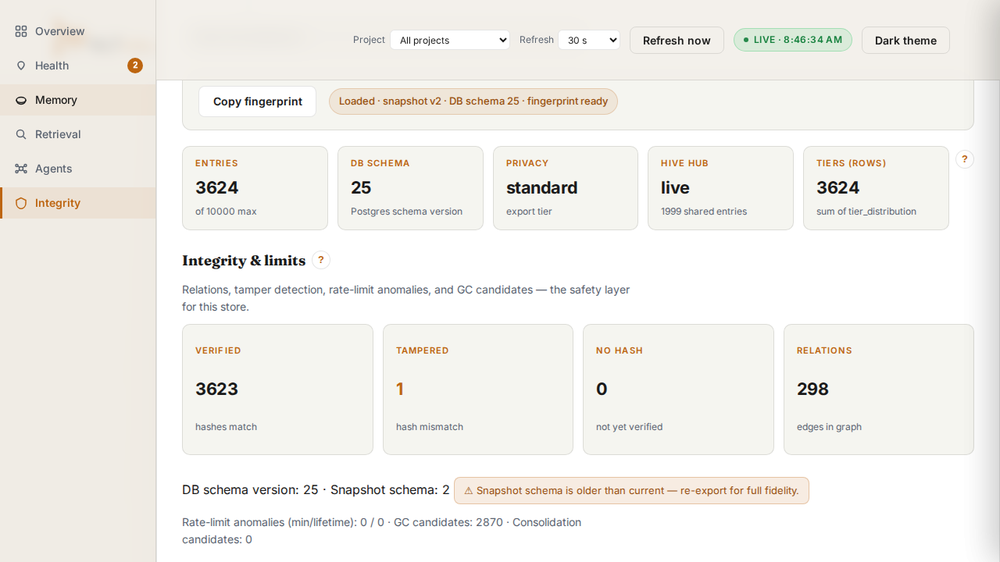
NLT Memory keeps architectural decisions warm across chats. Teams stop re-teaching the same constraints every Monday.
Report Studio cuts the quarterly rewrite tax when positioning changes but the brand pack stays honest.
Team satisfaction
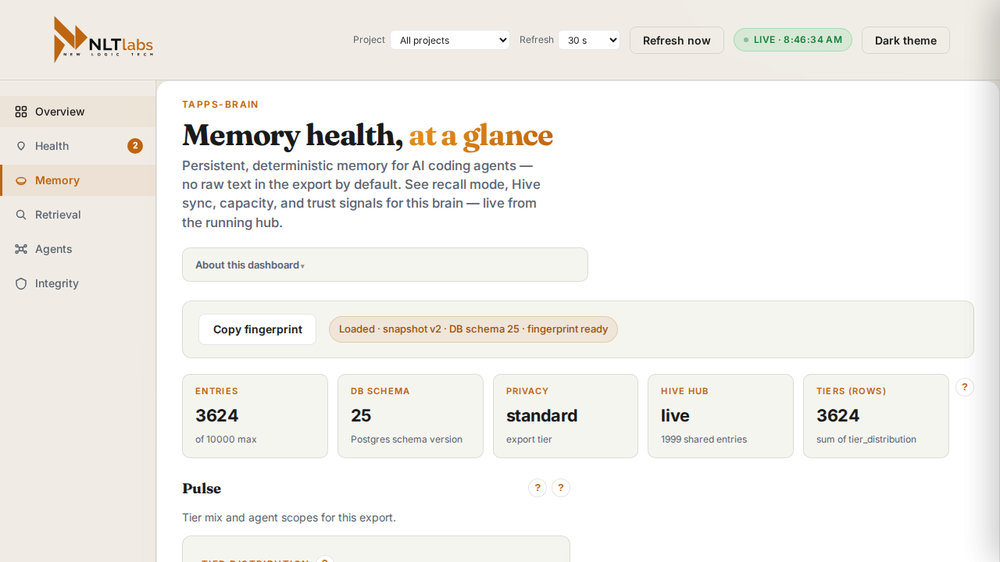
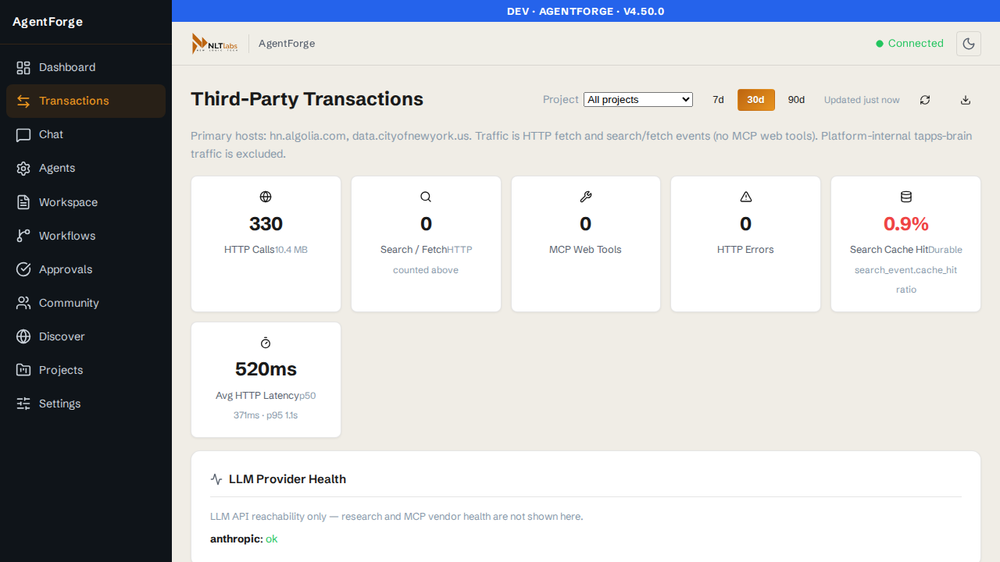
Dashboards for workflows, transactions, memory health, and integrity. Black-box fleets stop being a career risk.
Clean contracts and isolation mean consumer projects move without contaminating the shared platform.
Fractional platform depth without hiring a permanent vendor to babysit every agent. Your people keep the win.
How the model works
Diagrams teach the claim. GUIs prove it runs. Both belong on a sales page.
AgentForge is the OS. Memory is recall. Report Studio is collateral. Buy the stack or the modules.
Shared orchestration. Project-isolated consumer state. Platform purity by design.
Consumers at the edge. Bridge in the middle. Store at the core. Nothing skips a ring.
What worked for one agent can reach the fleet without Slack folklore.
Product surface
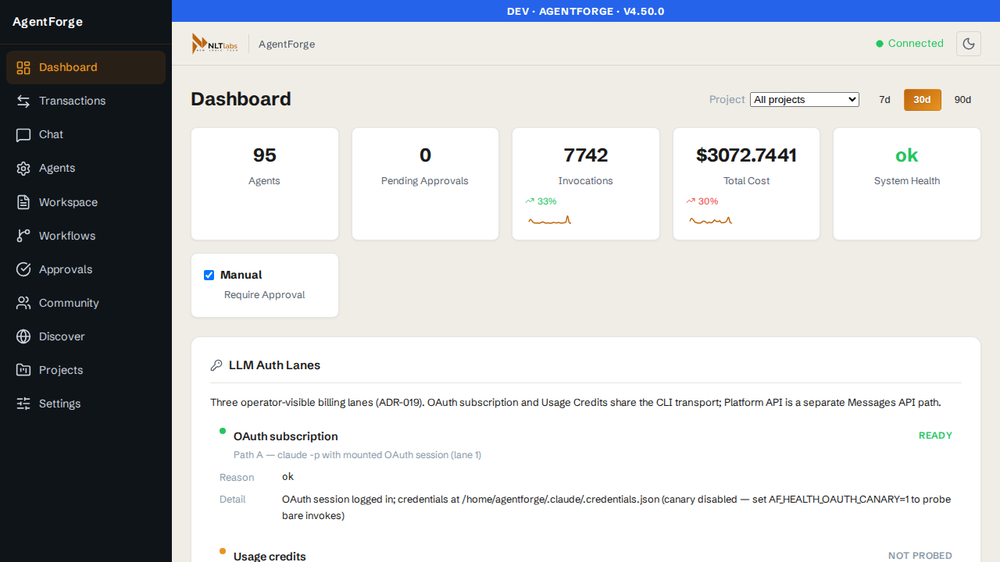
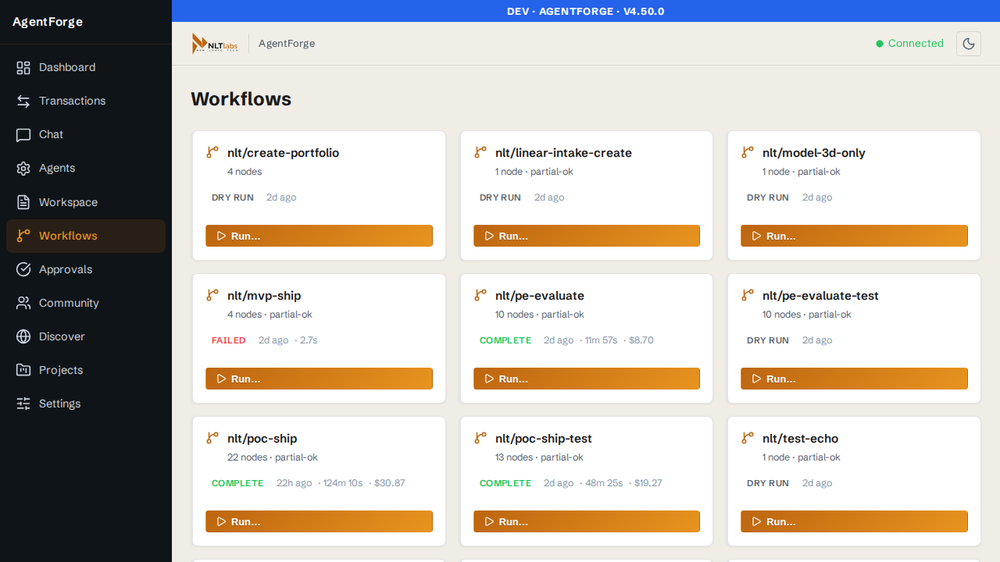
AgentForge console and NLT Memory operator surfaces captured from running systems.
Competitive advantage
Against raw SDKs, chat-only memory, and DIY orchestration. Concrete edges, not adjectives.
An orchestration OS with platform purity. Not a wrapper around one model vendor.
Cross-session recall with tiers and hive propagation. Not a vector dump pretending to be institutional knowledge.
What's in the line
Free 30-minute discovery call. We'll map ROI against your constraints and tell you honestly if this isn't the right path.